Rule 5
Military Units
There are three types of military units: leaders, land units, and naval units. This section shows an example of each military unit and explains the importance of any numeric values on the counter. The pieces provided are an absolute limit. No more may be created for any purpose; the number provided is indicative of the overall manpower and financial resources of each power during this period. Military units use the same color as the home spaces for each power.
5.1Leaders
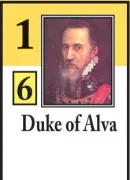
Leaders are placed in plastic stands so players can quickly determine their current location on the map. (Flat leader counters are also provided for those who prefer this alternative.) The numeric information
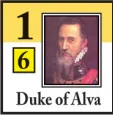
contained on the leader counter differs slightly for army and naval leaders. Naval leaders have a blue background for their counters that distinguishes them from army leaders.
Army Leader
Battle Rating: The top number on army leaders is their battle rating. Higher battle ratings increase the chance of successfully intercepting or avoiding battle, and add extra dice during assault and field battle.
Command Rating: The bottom number (always appearing in a yellow box) is the leader’s command rating. This number indicates the number of land units the leader can control at one time.
Formations
A formation is a group of land units in a single space that functions as a combined entity for the purposes of movement, field battle, intercept, and assault. One or more army leaders may also be included in the formation or even move without units. The maximum number of land units in a formation is dependent on the Command Rating of any leaders present:
| Leaders Present | Maximum Formation Size |
|---|---|
| none | 4 |
| 1 | Command Rating of leader |
| 2 or more | Sum of highest two command ratings |
Army leaders are never counted when determining the size of a formation. Formations may not include units from two different major powers. They may include units of a major power and a minor power which is actively allied to that major power.
FORMATION EXAMPLE: The Ottoman leaders Suleiman (command rating 12) and Ibrahim Pasha (command rating 6) are stacked in Buda with 12 regulars and 2 cavalry. The Ottoman spends 1 CP to move a formation to Pressburg. If the Ottoman includes neither leader with the formation, just 4 land units may move. If the Ottoman includes only 1 leader, the number of regulars and cavalry must be equal to or less than the command rating of that leader. The Ottoman player would have to move both leaders from the space in order to move all 14 land units from Buda.
Naval Leader
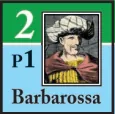
Battle Rating: The top number on naval leaders is their battle rating. Higher battle ratings increase the chance of successfully intercepting or avoiding battle, and add extra dice during naval combat.
Piracy Rating: The Ottoman naval leaders Barbarossa and Dragut possess a second numeric value. This number (after the “P”) is their piracy rating, indicating the number of extra dice the leader provides when present in a sea zone where the Ottoman is initiating piracy.
5.2Land Units
There are three types of land units, all represented with circular pieces. Land unit pieces come in different “denominations” (1, 2, 4, and 6) to facilitate stacking. Not all denominations are available for every power. Players may free up small denomination units at any time by replacing several pieces (all of the same type and all in the same space) with a stronger piece of equal total strength. If, after freeing up small denomination units wherever possible across the board, a power still has an insufficient number of small denomination units to properly “make change” to satisfy a Combat or Event card result, that power loses additional units from the space where the combat or event is occurring until a number is reached that can be represented with the available counters.
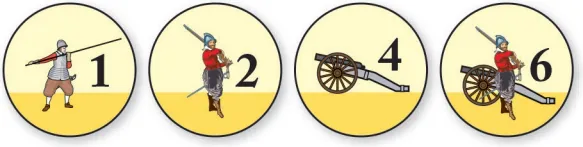
The four denominations of Hapsburg regulars
Regulars: Regulars have a multi-colored unit symbol and a dark stripe across the bottom of the counter in their power’s color. The numeric value on the counter shows the number of regulars represented by this game piece. All powers, both major and minor, have regulars.
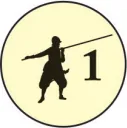
Mercenaries: Mercenaries have a solid black unit symbol. The background is a pale version of their power’s color. The numeric value on the counter shows the number of mercenaries represented by this game piece. All major powers except the Otto- man receive mercenaries. Mercenary units can be found on the reverse side of regulars for these powers. Mercenaries are cheaper to construct than regulars, but may desert a player at a key moment.
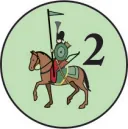
Cavalry: Only the Ottoman player possesses cavalry units. The numeric value on the counter shows the number of cavalry units represented. Cavalry units can be found on the reverse side of Ottoman regulars. Cavalry aid in intercept and avoid battle attempts, but are ineffective during siege operations.
5.3Naval Units
Rectangular pieces are used to represent naval units. Each naval unit always represents a single squadron or corsair. There are no denominations of naval units.
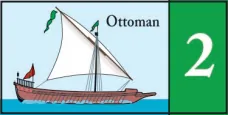
Squadron: Naval squadron counters depict a vessel with white sails. The numeric value on the counter shows the number of dice it rolls in naval combat and the num- ber of enemy hits required to eliminate it. The color around the number shows which power owns the squadron. All powers have naval squadrons, except the Protestants and Hungary/Bohemia.
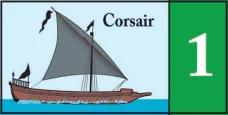
Corsair: Corsair counters depict a vessel with black sails. The numeric value on the counter shows the number of dice it rolls in naval combat and the number of enemy hits required to eliminate it. Corsairs can be found on the reverse side of Ottoman naval squadrons. Only the Ottoman power receives Corsairs.