Rule 21
Major Powers
This section identifies the rules that apply specifically to one of the major powers. All unique characteristics of a power are mentioned here, even if they just refer to a more detailed rule section elsewhere.
21.1Ottoman
The Ottoman is the only power that may build cavalry (a cheap land unit that helps in interceptions and avoid battle attempts). The rules for cavalry are contained in Sections 5, 13 and 17. They also are the only power that builds corsairs and initiates piracy. The rules for establishing pirate havens at Algiers, Oran, and Tripoli are given below; the rules for conducting piracy are located in Section 16.4. Finally, the Ottoman, like the English, may have to divert troops off the map to handle foreign wars. Foreign wars are presented in Section 21.7.
Barbary Pirates and Pirate Havens

Three spaces along the North African coast (Algiers, Oran and Tripoli) are marked with green on the bottom half of their space to show that they start the game with one status, but can be converted into pirate havens through events. The Ottoman power may begin building corsairs and initiating piracy once the Barbary Pirates Mandatory Event has been played. Prior to this event, the Algiers space is out of play and can not be entered by a unit of any power. That space does not count as an Ottoman key at the beginning of the game either. When the Barbary Pirates event is played, add a square control marker from the Ottoman power card to the Algiers space and add 2 corsairs, 2 regulars, and Barbarossa to that space (as specified on that card). This space is now the focal point for Ottoman piracy in the Mediterranean. After the Barbary Pirates event has been played, the Hapsburg home spaces of Oran and Tripoli may become additional pirate bases with the Pirate Haven Event card. When Pirate Haven is played, the Ottoman player adds 1 regular and 2 corsairs to the appropriate space. It also converts Oran or Tripoli into a fortified space; mark this new status by putting a Pirate Haven marker there. Once converted into Ottoman pirate havens, these three spaces are considered to be Ottoman home spaces (with a fortress present) for all purposes. The only exception is that the Ottoman may only construct one type of unit (corsairs) in these spaces. Prior to conversion into pirate havens, Oran and Tripoli are considered to be Hapsburg home spaces in all respects.
21.2Hapsburg
Charles V received a lengthy series of dynastic inheritances that left him as the most powerful man in Europe at the start of his reign (1519). However, during this period, Charles’ greatest challenge is the geography of this empire; he faces threats from all sides and has to meet them using a set of geographically dispersed assets. To deal with these issues, the Hapsburg power has two unique properties, detailed in the sections below.
Holy Roman Emperor
At the start of his reign, Charles is named Holy Roman Emperor, adding most of the German-speaking lands in Europe to his demesne. His role as protector of Germany is reflected by the Hapsburg control markers that start the game over most Protestant home spaces. Charles toured his vast empire throughout his reign, traveling almost every year, and never spending more than a few years in a row in any area. This ability to quickly jump to another part of his realm is reflected by the Hapsburg Home card, Holy Roman Emperor. This card allows Charles to immediately jump to any other Hapsburg home space before spending the 5 CPs that the card provides. Note that the Response card Gout can be used to stop this special move (and in fact, Charles did suffer greatly from gout for the last two decades of his life). Only the Duke of Alva may accompany Charles on this special move; land and naval units that start in the same space as Charles may not use this special ability.
Dual Capital Cities
The Hapsburg power is the only one in the game with 2 capitals (Valladolid and Vienna). This benefits them by allowing them to:
- Return home to either capital in the Winter Phase, and
- Add 1 regular in each capital in the Winter Phase.
Despite the dual capitals, the Hapsburg is still allowed to make only 1 move during the Spring Deployment Phase.
21.3England
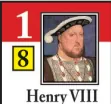
The special abilities granted to the English player all revolve around use of their Home card, Six Wives of Henry VIII. Henry’s marital status and heirs are tracked throughout the game, as detailed in the section below.
This Home card also gives the English the ability to declare war against Scotland, France, or the Hapsburgs during the Action Phase. The only other card allowing DOW during the Action Phase is Machiavelli: “The Prince”, which enters the game on Turn 3 (and can be played as an event by any power).
Henry’s Wives & Heirs
At the start of the game, Henry VIII is married to Catherine of Aragon, who has produced only a female heir, the future Mary I. By Turn 2 of the game (1526), Henry is convinced that Catherine will not produce a male heir, and his interest is captivated by the young Anne Boleyn. Thus starts Henry’s famous progression through five new wives in an attempt to produce a male heir to continue the Tudor dynasty.
Marital Status Changes
The marker “Henry’s Marital Status” starts the game on the Catherine of Aragon space on the English power card. Starting on Turn 2 (and each turn thereafter), the English power may play the Six Wives of Henry
VIII card to advance the marker one space to the right along this track. [The marker may also be moved a space if the Papacy agrees to grant a divorce between Henry and Catherine (Section 9.1) or if the “3” result is obtained on the Henry’s Wives’ Pregnancy Chart.] When the marker reaches a space with the name of one of Henry’s subsequent wives, Henry has married again. Roll a die and consult the Henry’s Wives’ Pregnancy Chart printed on the game map. Add +1 to the roll if the new wife is Jane Seymour. After each result is achieved, place the marker for the new wife on the chart over the number rolled. If a result is ever rolled again, move up from that modified die roll one line at a time until you come to a result that has not yet occurred. This new result is then applied. Each result is explained in detail on the chart. The “3” result (“Henry’s flirtatious young wife …”) allows the Marital Status marker to be advanced an additional space when England first decides to pass(rather than play a card) during one of their impulses later this turn. Note that neither this bonus movement of the Marital Status marker nor playing of the Six Wives of Henry VIII event to advance the marker may ever be undertaken if Henry no longer rules England, if Henry is in a space under siege, or if Henry is currently captured. The Marital Status marker may also never be advanced if both Edward and Elizabeth have already been born.
Marriage Benefits
Each of Henry’s wives had personal characteristics, religious beliefs and dynastic ties that provided benefits to the English ruler. Each marriage therefore may provide a benefit to the English player, as specified below:
| Wife | Benefit |
|---|---|
| Anne Boleyn | Reformation starts in England on the turn after the marriage to Anne (3 Event cards added to deck; Cranmer, Coverdale and Latimer enter play). |
| Jane Seymour | +1 to her roll on the Pregnancy Chart. |
| Anne of Cleves | If English and Protestant powers are allied when marriage occurs, each of these powers draws a card from the deck after the Pregnancy Chart roll. |
| Kathryn Howard England draws a card from the deck after the Pregnancy Chart roll (representing Henry’s infatuation with the young, vivacious Kathryn). | |
| Katherine Parr | No additional bonus (though a marriage to Katherine Parr ensures that both Edward and Elizabeth are born). |
Catherine of Aragon
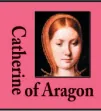
In 1533, Archbishop Thomas Cranmer declared Henry VIII’s marriage to Catherine of Aragon to be void, paving the way for Henry’s marriage to Anne Boleyn. Since Catherine was Charles V’s aunt, this act had diplomatic repercussions felt across Europe. Thus, whenever Henry marries Anne Boleyn (either if the Papacy has granted a divorce or if the English player played the Six Wives of Henry VIII event to advance to Anne Boleyn), give the Catherine of Aragon marker to the Hapsburg player. The Hapsburg uses this marker to gain a 2 CP discount on their next DOW against England.
The English Succession
The following table summarizes the possible English successions to Henry’s rule, based on the results achieved on the Pregnancy Chart.
All results are 3 or less: Mary I is added to the deck on Turn 6 and rules for the rest of the game once she enters play.
Highest result is a 4 (Elizabeth): Mary I is added to the deck on Turn 6. Elizabeth I is added to the deck at the start of the first turn after Mary takes the throne. She rules for the rest of the game once she enters play.
Highest result is a 5 (sickly Edward): Edward VI is added to the deck on Turn 6. Mary I is added to the deck at the start of the first turn after Edward takes the throne. If Mary takes the throne, check to see if Elizabeth was born. If so, add Elizabeth to the deck at the start of the first turn after Mary takes the throne. If not, Mary rules for the rest of the game.
Highest result is a 6 (healthy Edward): Edward VI is added to the deck on Turn 6 and rules for the rest of the game once he enters play.
If a result of 5 or 6 occurs on Turn 6 or later, Edward VI may be born while Mary I’s card is in a power’s hand or in the deck. In this one particular case, the play of the Mary I card by any power is equivalent to playing the Edward VI card. Edward becomes ruler of England immediately. If Edward is sickly, Mary’s card is put in the discard pile and is included in the deck for the next turn; if Edward is healthy, the Mary card is removed from play.
Mary I as Ruler of England
Henry’s heirs all have Administrative Ratings and Card Bonuses as shown on the appropriate Mandatory Event card. These rulers also determine the religious modifiers of English land units, as described in Section 18.2. However, there is one ruler, Mary I, who significantly affects the play of the English power during her reign. A devout Catholic, Mary initiated a vehement return to Catholicism during her reign. Therefore, the following procedure is in effect when Mary rules England.
English Impulses Under Mary I
- 1. Show Card: When the English impulse begins, the English power specifies the card to be played but does not yet indicate whether it will be played as an event or for CP.
- 2. Mandatory Events: If the card is a Mandatory Event, it is resolved normally. If the card is not a Mandatory Event, proceed to Step 3.
- 3. Roll Die: The English power rolls a die. On a roll of 1-3, proceed to step 4. On a roll of 4-6, the card is played as normal. The English player goes on to declare whether or not it is using the card as an event or CP and resolves the impulse normally. Skip the rest of this procedure.
- 4. Papal Actions: The Papal power gets to execute one or more actions based on the CP value of the card. The English impulse is over as soon as this Papal action is resolved.
- 1 or 2 CP card: Papal power initiates a Burn Books action targeting the English language zone. You may only attempt conversions on spaces in the English language zone.
- 3 CP card: Papal power initiates a Theological Debate targeting the English language zone.
- 4 or higher CP card: Papal power initiates a Burn Books action targeting the English language zone followed directly by a Theological Debate in England.
Ignore this procedure entirely if all English home spaces in the English Language Zone are Catholic at the start of the impulse; play proceeds normally in such a case. While Mary rules, the English player is also under the following additional restriction: Response and Combat cards may only be played for their CP value in the Action Phase.
21.4France
The French player has one special attribute: the ability to earn VP or improve their hand of cards directly through the play of its Home card. Francis I moved the French nobility away from building castles for defensive purposes toward the concept of a “chateau” as a grand estate and showplace for the arts. Each time the French player plays Patron of the Arts as an event, the French player rolls a die and consults the Chateau Table printed on the French power card. That roll is modified as follows:
- +2 if Milan is under French control
- +1 if Florence is under French control
- +2 if France controls 3 keys in the Italian language zone
- +1 if this is the Tournament Scenario
- –1 if a French home space is controlled by another power
- –2 if enemy units currently occupy a French home space
Each result on the Chateau Table indicates whether or not the French player gains 1 VP; if so, move the marker on the VP for Chateaux track on the French power card one space to the right. Chateau Table results may also allow the French player to draw 1 or 2 cards from the deck and/or discard a card from their hand. The draws from the deck are always taken first, followed by any discards. (See Section 6.1 for rules on discarding Home Cards and Mandatory Events). The French player may never earn more than 6 VP from building chateaux in a game; if 6 VP have already been earned Patron of the Arts may not be played as an event and must be used as a 5 CP card.
21.5Papacy
There are four unique considerations for the Papacy: the establishment of the Jesuit order through the play of the Society of Jesus Mandatory Event, excommunication of reformers and rulers through the play of the Papal Bull Home card, the Sack of Rome Event card, and the building program to create the new St. Peter’s Basilica in Rome to gain VP (as described in Section 18.1).
Society of Jesus
The Papacy may utilize the Found Jesuit University action once the Society of Jesus Mandatory Event has been played. Prior to this event, there are no Jesuit Universities on the map and this action may not be taken.
Excommunication

The Papal Home card Papal Bull may be played as an event to excommunicate a reformer or ruler. The Papacy always has grounds for excommunication against a reformer. However, the Pope must have justification before excommunicating a ruler. The possible grounds are:
- That ruler’s power is currently at war with the Papacy.
- That ruler’s power is currently an ally of the Ottoman.
- The ruler is Henry VIII and at least one English home space is under Protestant religious influence.
Being allied with a power that is at war with the Papacy is not by itself grounds for excommunication. The Pope may not excommunicate any of Henry VIII’s heirs. When the Papal Bull card is played against a valid target, place an “Excommunicated” marker on the appropriate box at the top of the Papacy power card; this figure or ruler may not be excommunicated again on a later turn (and the French can only have Francis I or Henry II excommunicated, not both of them).
Against a Reformer
When a reformer is excommunicated, remove his debater and reformer counters from the map for the rest of the turn. Flip the debater to the committed side; Event cards that require this debater to be uncommitted may not be played this turn. He reenters play at the start of the next turn as described in Section 8.2. Note that even if Luther is excommunicated, he can still insert himself into a theological debate through play of the Home card Here I Stand (after the debate he is once again placed off the map). Excommunication of a reformer has no effect beyond the turn in which it is declared. After the reformer is removed from the board, the Papacy may initiate a theological debate in the same language zone as the excommunication (i.e. English for Cranmer; French for Calvin; German for Luther or Zwingli).
Against a Ruler

When a ruler is excommunicated, place a “–1 Card” marker on their power card. This marker remains on the power card until this power either concludes a war with the Papacy or donates a card draw to the Papacy as described in Section 9.5 (it is not removed if this ruler dies). This power receives 1 less card per turn during the Card Draw Phase while this marker is present on their power card. The Papacy now chooses 2 of that power’s unoccupied home spaces that are under Catholic religious influence; add Unrest markers to those spaces.
Sack of Rome
In order for the Sack of Rome event to be played, there must be a single stack of non-Papal troops in an Italian-speaking space that contains more mercenaries than the number of Papal regulars in Rome. That stack does not need to be from the same power that plays the event, and neither these units nor the power playing the event needs to be at war with the Papacy. Rome does not even need to be under Papal control. The play of this card does not add a new state of war between powers and it is not grounds for excommunication. Once the event is played, undertake the following steps:
Sack of Rome Procedure
-
1. Place Troops in Rome: The stack of troops (including all regulars, mercenaries, and army leaders) is removed from its current space and placed on Rome. Make a note of the space; any surviving troops will return there.
-
2. Resolve Field Battle: Although Rome is a fortified space, fight a field battle between this stack and the Papal regulars in Rome. Ignore formation limits; roll 1 die for each unit in the attacking stack (plus any dice for the best Battle Rating of a leader that was moved to Rome). Papal mercenaries and allied units in Rome are ignored. The Papacy is the defender in this battle (so it receives 1 extra die and they win ties; roll just 1 die if there are no Papal regulars in Rome). Both sides may play Combat cards (and any power may play a Response card).
-
3. Apply Hits: Apply all hits as losses (as usual). Hits caused against the Papal forces must be absorbed by Papal regulars first. Any hits in excess of the number of regulars may be applied to Papal merce- naries. Hits caused by the Papal forces must be applied as evenly as possible between mercenaries and regulars of the attacking force.
-
4. Return Troops: The stack of troops moved to Rome is returned to its starting space (though probably reduced by several units!).
-
5. Papal Victory: If the Papacy won the battle, the procedure is over. The Sack of Rome card returns to the discard pile and may reenter play on a future turn.
-
6. Papal Defeat: If the Papacy lost the battle, the effects are drastic. Reduce the accumulated CP on the St. Peter’s track of the Papal power card by 5 (but not below 0). The owner of the sacking stack then draws 2 cards from the Papal hand (remember, Home cards are never taken in random card draws). After reviewing those cards, he discards one and retains the other in his hand. If the Papacy only has 1 card available to draw, he retains that card. The Sack of Rome card is removed from the deck and may not reenter play.
21.6Protestant
The Protestant is the one power in the game which spends several turns focused entirely on the religious conflict, with no military concerns whatsoever. During this time, Germany is still under the protectorate of the Holy Roman Empire (and thus is covered in Hapsburg control markers). However, once the Reformation has spread (12 spaces converted to Protestant religious influence;spaces in unrest are counted) and is attracting notice across Europe, the Protestants begin to fear that their new religion will come under attack from Charles V. At this time, the Schmalkaldic defense league is formed through the play of a Mandatory Event. From this point on, the Protestant also has military matters to handle.
Prior to the Schmalkaldic League
Prior to the Mandatory Event Schmalkaldic League, the Protestant player is under the following restrictions:
- He can not build any military units.
- He can not move any military units.
- He may never gain mercenaries.
- He may never gain political control of a space.
Other powers are also under these restrictions:
- They may not declare war on the Protestant.
- Their units may not move or retreat into an electorate.
During this time, conversion of any electorate to Protestant religious influence allows the Protestant player to add Protestant regulars to that space. Remove the regulars from the Electorate display and place them on the appropriate space on the map.
Schmalkaldic League
The Mandatory Event Schmalkaldic League can be played as early as Turn 2. It is automatically triggered during the Winter Phase of Turn 4: it must occur at that time, if it hasn’t already. As described on the card, the following effects take place when Schmalkaldic League is played:
-
The army leader John Frederick is added to play. Place him with the stack of Protestant regulars closest to Wittenberg (usually Wittenberg itself).
-
The army leader Philip of Hesse is added to play. Place him with the stack of Protestant regulars that is closest to the Kassel space (usually Mainz).
-
Convert all Protestant home spaces that are currently under Protestant religious influence to Protestant political control. Spaces are not converted if they contain a Fortress marker.
-
All of the restrictions listed above in the section “Prior to the Schmalkaldic League” are now lifted.
-
The Hapsburgs and Protestant are now At War. The Papacy and Protestant are also At War. These powers may not lift these states of war for the rest of the game.
-
Any Protestant regulars and army leaders residing in an electorate that is under Catholic religious influence are displaced to the nearest electorate under Protestant religious control.
From this point forward, conversion of an electorate to Protestant religious influence only allows the Protestant player to immediately place Protestant regulars from the Electorate display on to that space if that electorate is also under Protestant political control and not under siege. If that electorate is not under Protestant political control or is under siege, those regulars are withheld from the map until the instant that space is under both Protestant religious influence and political control and is no longer under siege. To gain political control, the Protestant player now has to besiege those electorates which were not automatically converted by the play of the Schmalkaldic League event.
21.7Foreign War Cards
The Event cards Revolt in Egypt, Revolt in Ireland, and War in Persia force the Ottoman or English player to divert land units and/or army leaders off-map to resolve a foreign conflict. When these events are played, place the Event card on the map near the affected power’s home spaces. This power then selects the specified number of land units from any location on the map (except a space under siege) and moves those units onto the card. Units may be chosen from multiple stacks in different spaces. One army leader may be selected from any location on the board (even if under siege) and also moved onto the card. The power playing the event then specifies the strength of the foreign army; use any available independent land units to represent these foreign units (adding available minor power units if there are not enough independent ones available). The Ottoman or English player will receive 1 War Winner VP when the foreign war is over; place a War Winner marker on the Foreign War card to remind players of this fact. To resolve the conflict, the Ottoman or English player must spend 1 CP on the Fight Foreign War action for each resolution attempt. A field battle then ensues between the major power units and the independent units on the card. The battle is resolved just like a field battle on the map, except that formation limits are ignored, there is no defender to receive one extra die, and there is no retreat. If all independent units are eliminated, the foreign war is over. All remaining major power units on the card are placed back in their capital (or any other friendly home key if their capital is occupied by enemy units). If the independent units were not all eliminated, the major power will have to pay for another Fight Foreign War action in a future impulse. The Ottoman or English player receives one less card for each foreign war they are fighting during the Card Draw Phase (use a –1 Card marker for each as a reminder). Major powers may construct new land units directly onto a foreign war card that they are fighting. However a major power may never have more units on a foreign war card than originally called for by the event. Major power units on a foreign war card cannot return home (even in the Winter Phase) until they have eliminated all of the independent units in the foreign war.