Rule 8
Starting a Turn
Starting with this section (and continuing to Section 20), the rules are presented in Sequence of Play order. This section describes the start of a turn.
8.1Turn 1
On the first turn of the game, play begins with the Luther’s 95 Theses Phase. The Protestant player plays the Luther’s 95 Theses card as described in Section 18.1 to initiate the reforms of the Catholic Church. This phase is skipped on all subsequent turns.
8.2Card Draw Phase
The second phase is the Card Draw Phase. On each turn, players add leaders, debaters and reformers; add new cards to the deck; and deal cards during this phase.
Add Leaders
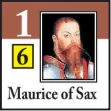
The Protestant army leader Maurice of Saxony is placed on the map at the start of Turn 6. Maurice is the only army leader that doesn’t either start the game on the map or enter via a Mandatory Event. Place Maurice in any electorate under Protestant political control.
Naval leaders eliminated from play are also brought back during the Card Draw Phase. Place them in a friendly port if possible. If no friendly port exists, they remain on the Turn Track for another turn. Naval units eliminated in a previous turn are also returned to each power’s pool of units available to be constructed at this time.
Add Reformers
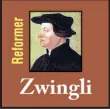
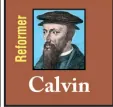
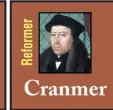
The reformers Zwingli, Calvin, and Cranmer are placed on the map. Reformers provide bonuses to the Protestant player during religious actions attempted in or adjacent to their space. The turn that Cranmer enters varies based on the timing of Henry VIII’s divorce proceedings. Place Cranmer on the map on the first turn after Henry has married Anne Boleyn. The complete information on the entry of reformers is shown in this table:
| Figure | Space | Turn of Entry (Phase) |
|---|---|---|
| Luther | Wittenberg | 1 (Luther’s 95 Theses Phase) |
| Zwingli | Zürich | 2 (Card Draw Phase) |
| Calvin | Geneva | 4 (Card Draw Phase) |
| Cranmer | London | Turn after Henry VIII marries Anne Boleyn (Card Draw Phase) |
Convert the religious influence of the space where a reformer enters to Protestant religious influence. Reformers may not move from their starting space at any time during the game. They are completely immobile. They may temporarily be removed from the map due to play of the card Calvin Expelled or through Excommunication (Section 21.5). Reformers temporarily removed from the map reenter play in the same space during the Card Draw Phase at the start of the next turn. The religious influence of a space does NOT change when a reformer reenters play. Reformers are never affected by the presence of land units or by changes in the political control and religious influence of spaces.
NOTE: Zwingli is permanently removed from play by the event Zwingli Dons Armor. He never reenters play.
Add Debaters
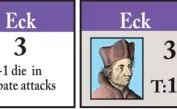
Front Back
Debaters represent the Protestant and Papal (Catholic) points of view during Theological Debates. The Protestant player starts the game with four German-speaking debaters. During the course of the game, additional Protestant debaters enter play during the Card Draw Phase, both for the German language zone and the English and French language zones. The Papacy starts with five debaters and adds more during play. Papal debaters may participate in debates in any language zone; they are not partitioned by language like their Protestant adversaries.
The number in the middle of the debater counter (on both sides) is their debate value. Text describing the debater’s special bonus appears on the front side of the counter against a white background. Each debater also has a reverse side with a gray background that includes their picture. A debater is flipped to this reverse side when “committed” to a particular activity for that turn. Commitment makes that debater more vulnerable to Theological Debates called by the opposing religious power. The turn of entry is also printed on the back of the debater’s counter. Debaters are placed on the Religious Struggle Card in the appropriate box of available debaters, with their front side up, when they enter the game. Note that the English debaters Cranmer, Coverdale and Latimer may not be added if the reformer Cranmer is not in play. In such a case, these three English debaters are delayed until the turn in which Cranmer does appear.
Add New Cards to Deck/Deal Cards
If this is Turn 3 or later, new cards may be added to the deck. Cards are then dealt to each power as described in Section 6.2.